Working with Twisted Pixel Games, I facilitated the development of the Meta Quest 3/3S exclusive: Marvel's Deadpool VR. My responsibilities were primarily in QA/QC of environment assets and props over several levels.
Marshall Womack did an incredible job on Art Direction by providing thorough, clear feedback and by maintaining a consistent vision for this spectacular VR experience, managing several artists across various teams.
Marshall Womack did an incredible job on Art Direction by providing thorough, clear feedback and by maintaining a consistent vision for this spectacular VR experience, managing several artists across various teams.



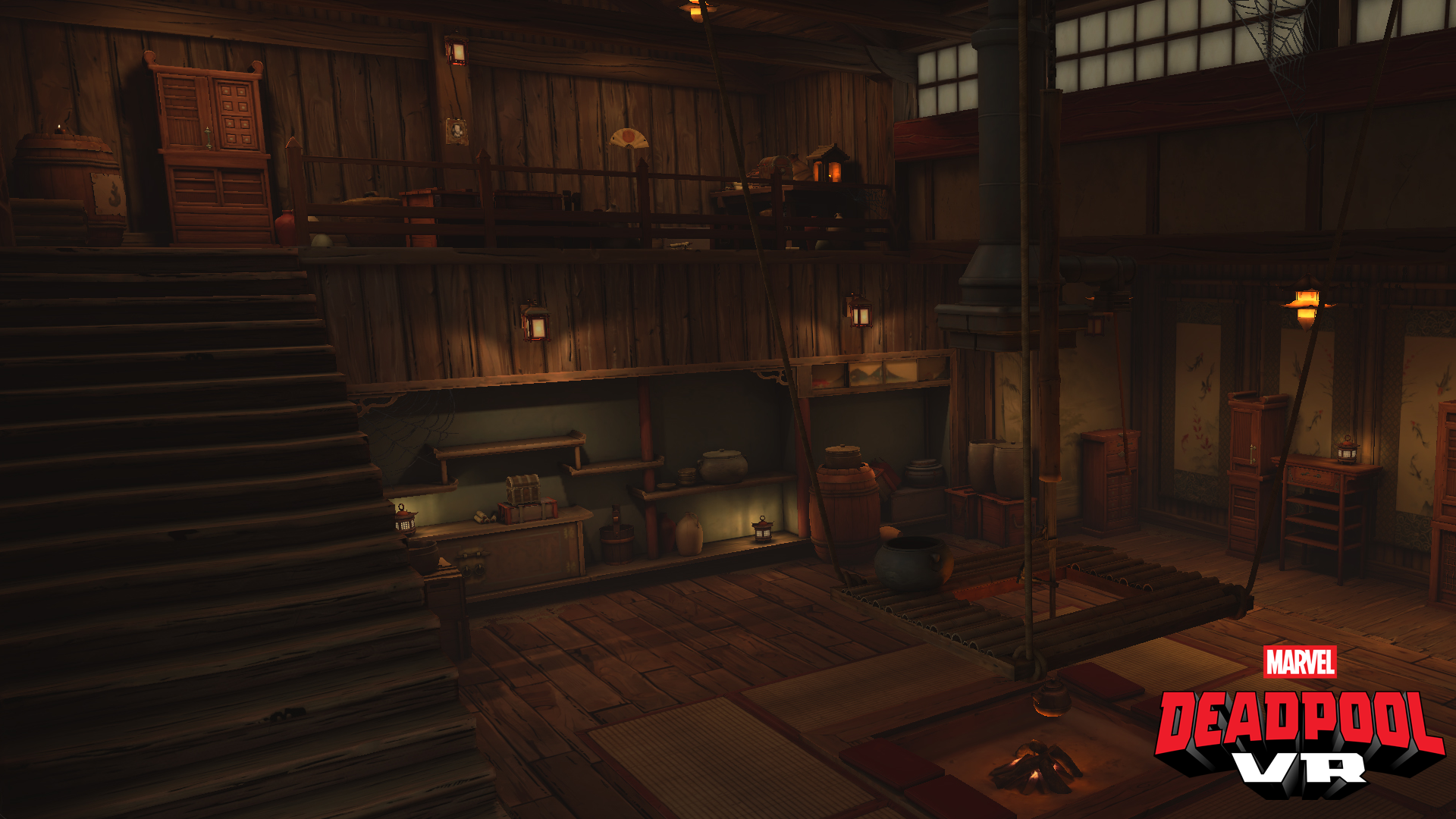
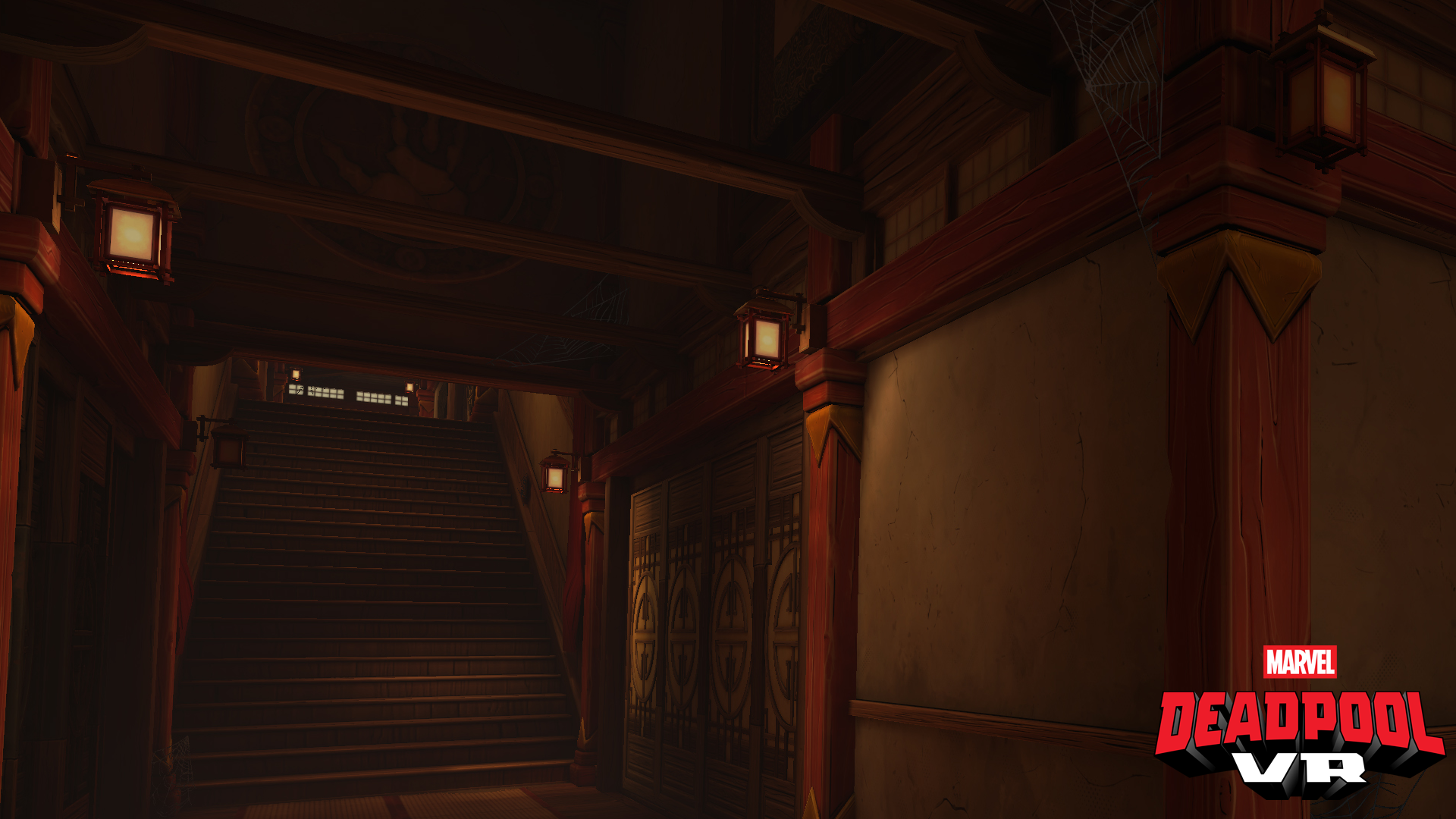
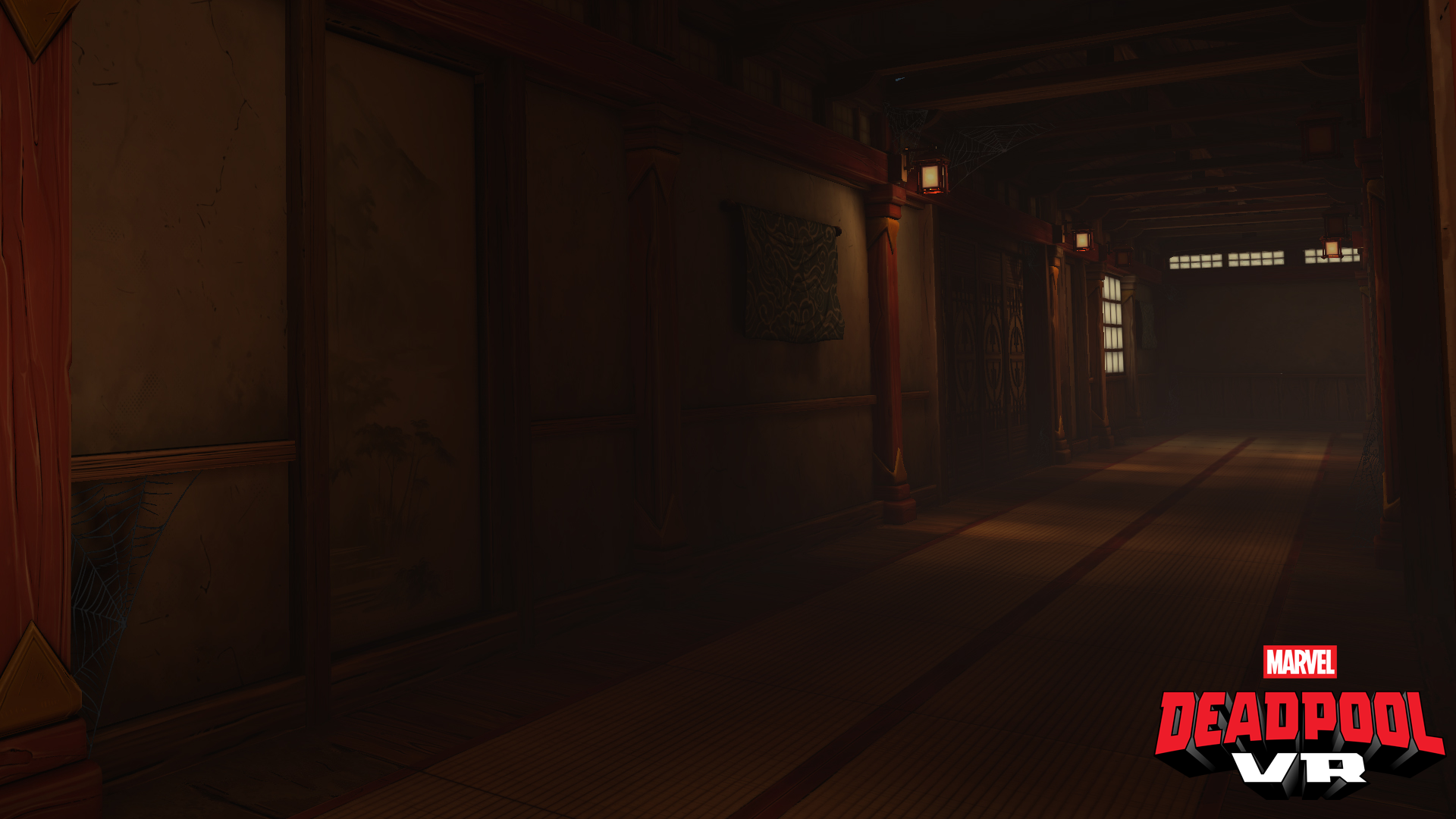
My primary responsibility included reviewing and editing assets from TPG's existing environment art department as well as two other outsource partners: Lemonsky Studios and Nuare. I improved level and asset stability by identifying geometry issues such as lamina faces, z-fighting, incorrect triangulation, collision errors, and other missing material or object related dependencies. I had my hands in nearly every component of environment art — making sure things were in organized appropriately from source art organization and file cleanup, to asset tracking and verifying hierarchies in Perforce —on top of then modeling and texturing props to pick up the slack.
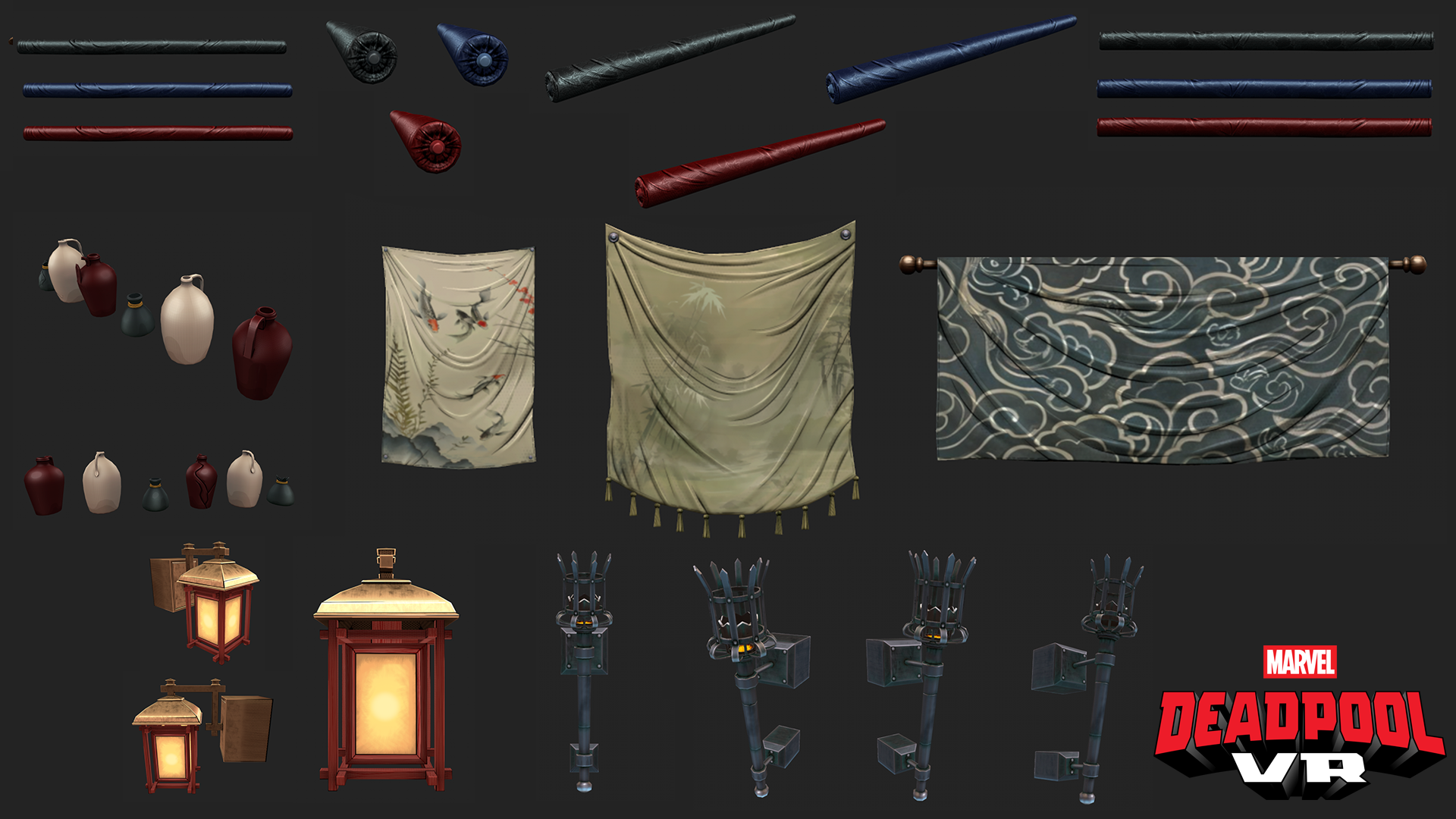
Some props I made for the Yashida Compound level.
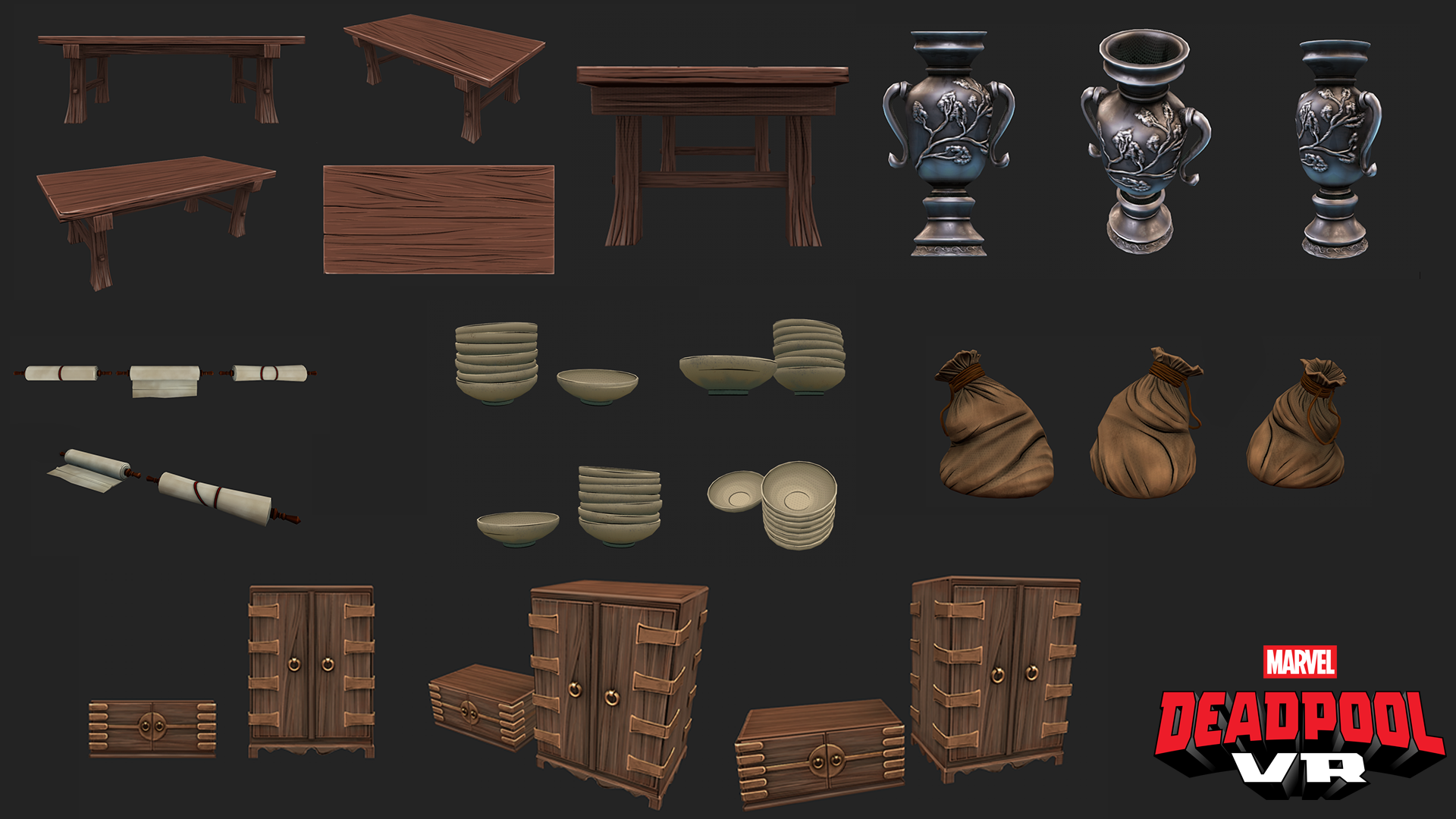
Some props I made for the Yashida Compound level.
Below you will find my vitally important optimization contributions to their production pipeline.
Every building across the Symkaria level of Marvel's Deadpool VR required hyper-optimized lightmap UVs due to the sheer scale of the level and the hardware limitations of the Quest 3 and Quest 3S. Beyond that, Unreal Engine's automatic LOD tools were simply not maintaining detail where necessary, and were not optimally deleting geometry when needed. I came in to manually create, assign, and adjust the LODs across each building in Symkaria, managed instances of said buildings, and also offered the team a collection of variations of each building for missing walls, back faces, etc.
Riki Babington is responsible for making great use of my lightmap optimizations, creating a fantastic mood for the scenes that unfold in the Symkaria environment.
Every building across the Symkaria level of Marvel's Deadpool VR required hyper-optimized lightmap UVs due to the sheer scale of the level and the hardware limitations of the Quest 3 and Quest 3S. Beyond that, Unreal Engine's automatic LOD tools were simply not maintaining detail where necessary, and were not optimally deleting geometry when needed. I came in to manually create, assign, and adjust the LODs across each building in Symkaria, managed instances of said buildings, and also offered the team a collection of variations of each building for missing walls, back faces, etc.
Riki Babington is responsible for making great use of my lightmap optimizations, creating a fantastic mood for the scenes that unfold in the Symkaria environment.
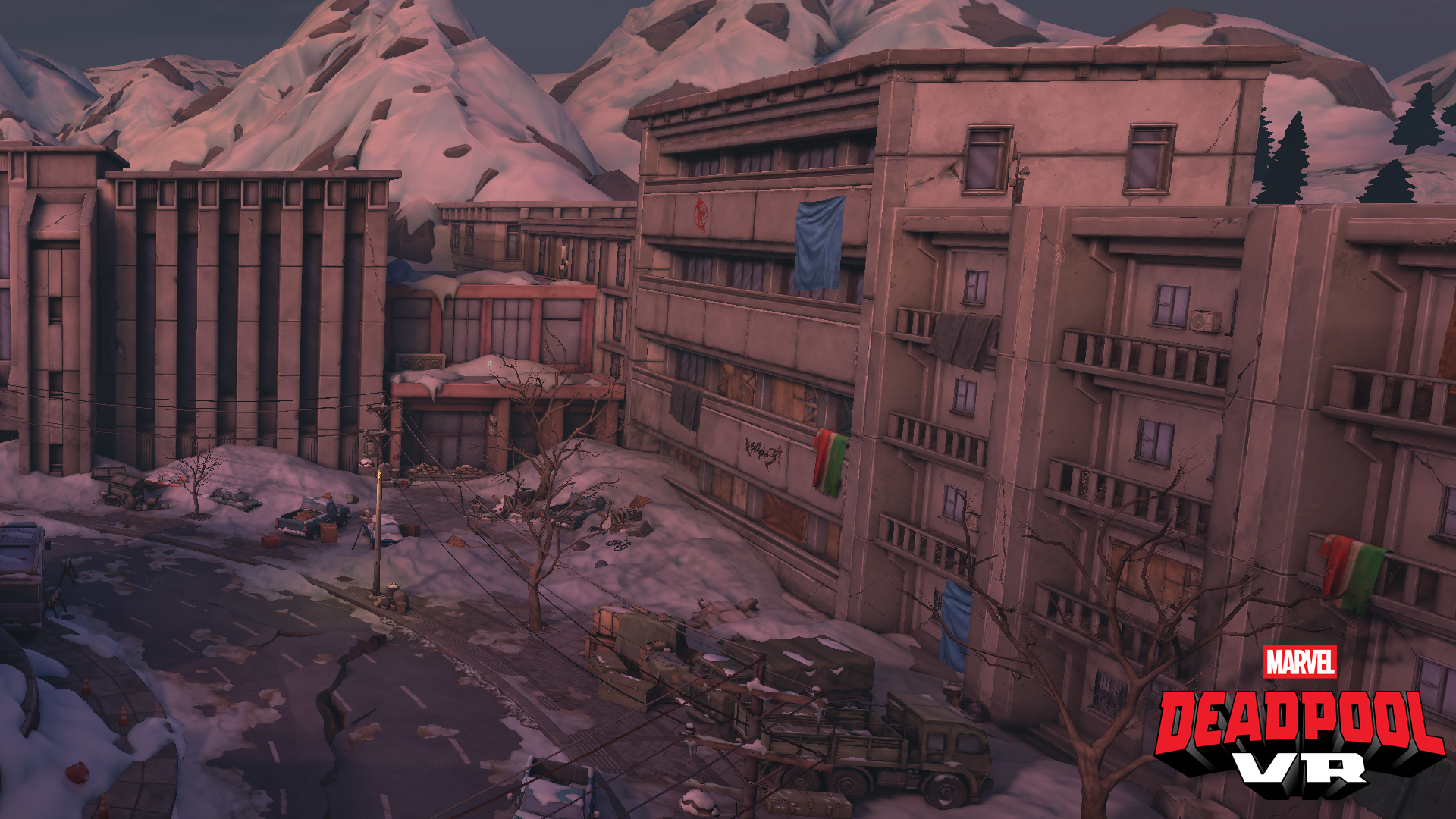
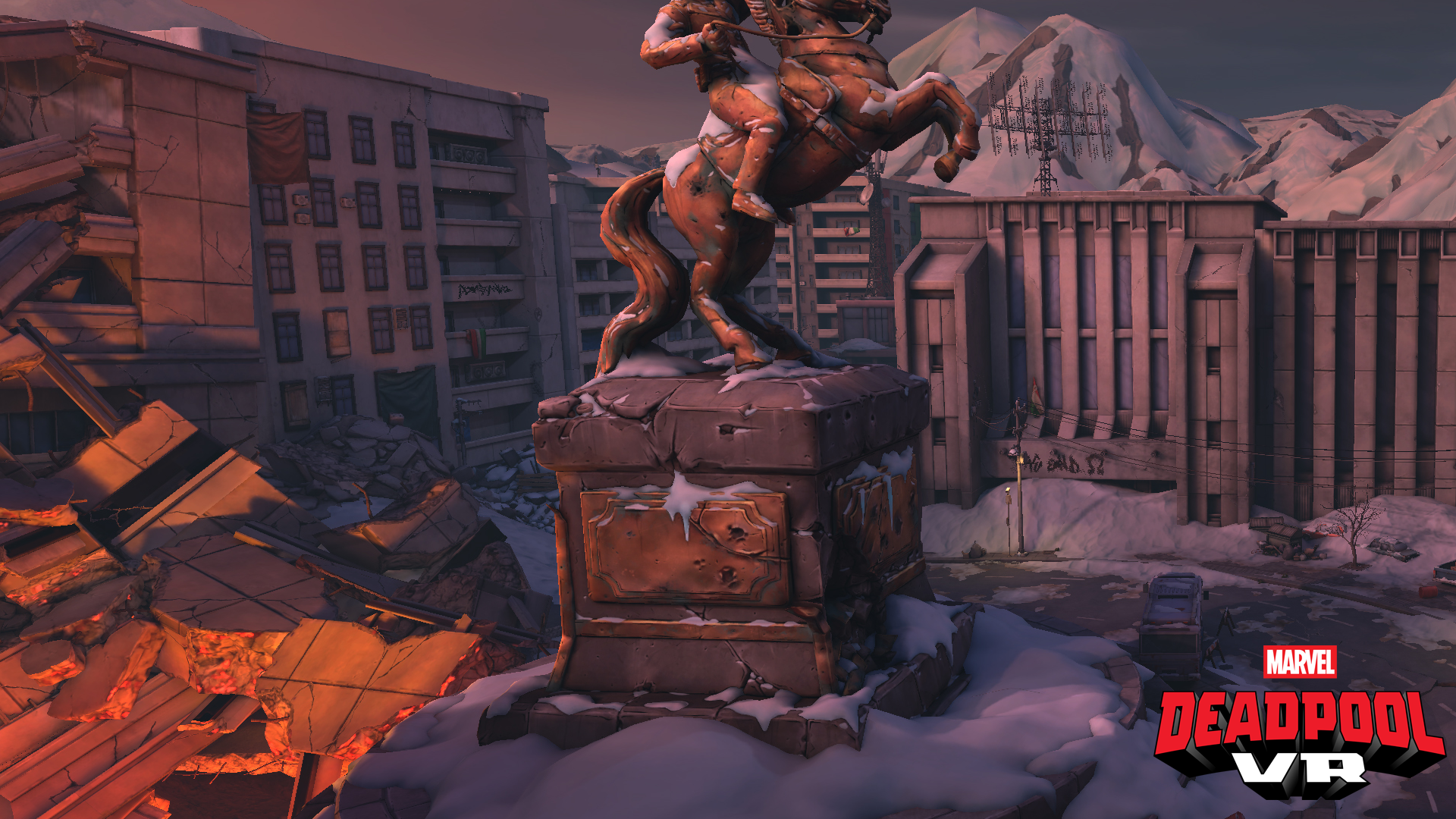
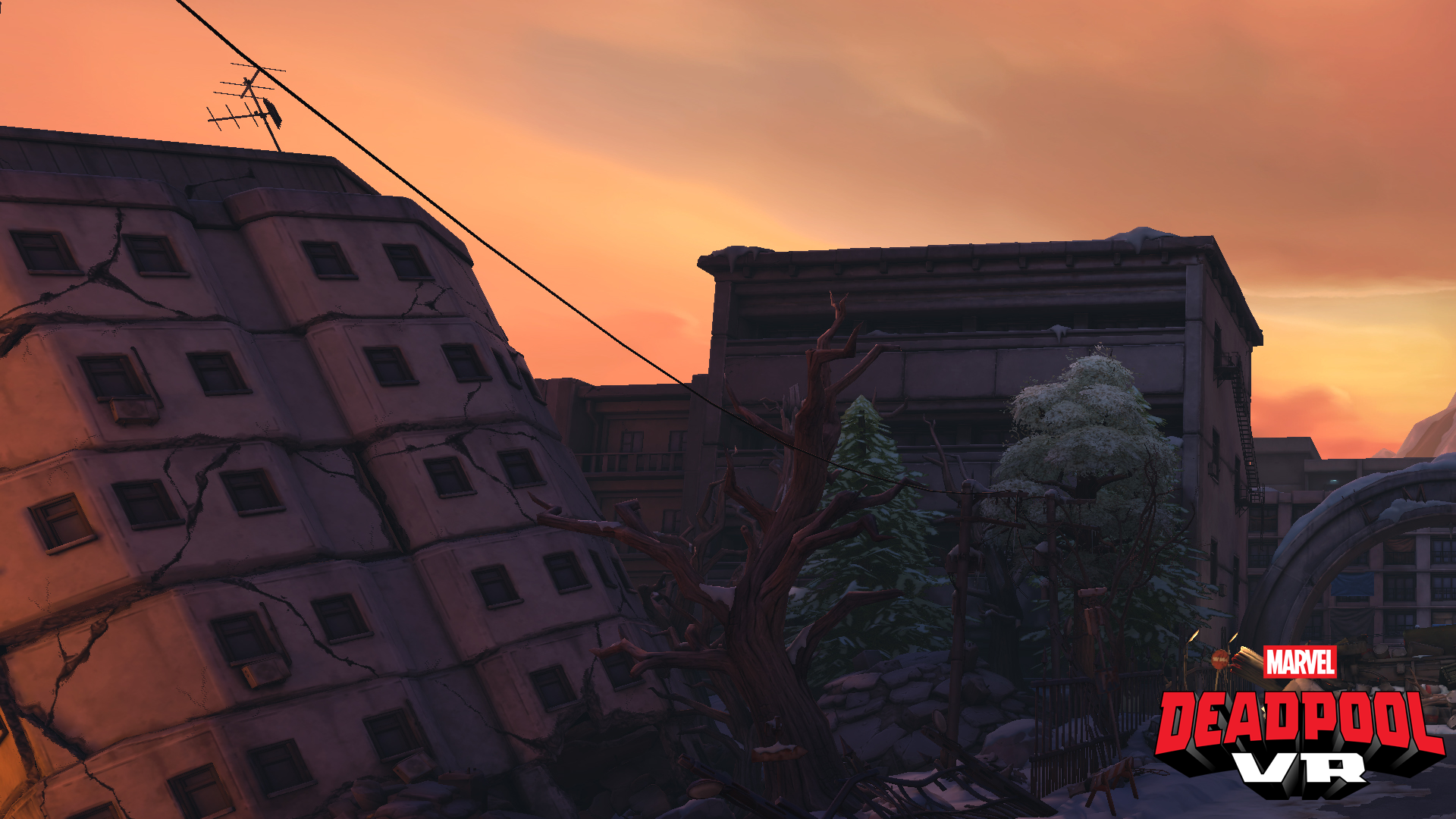
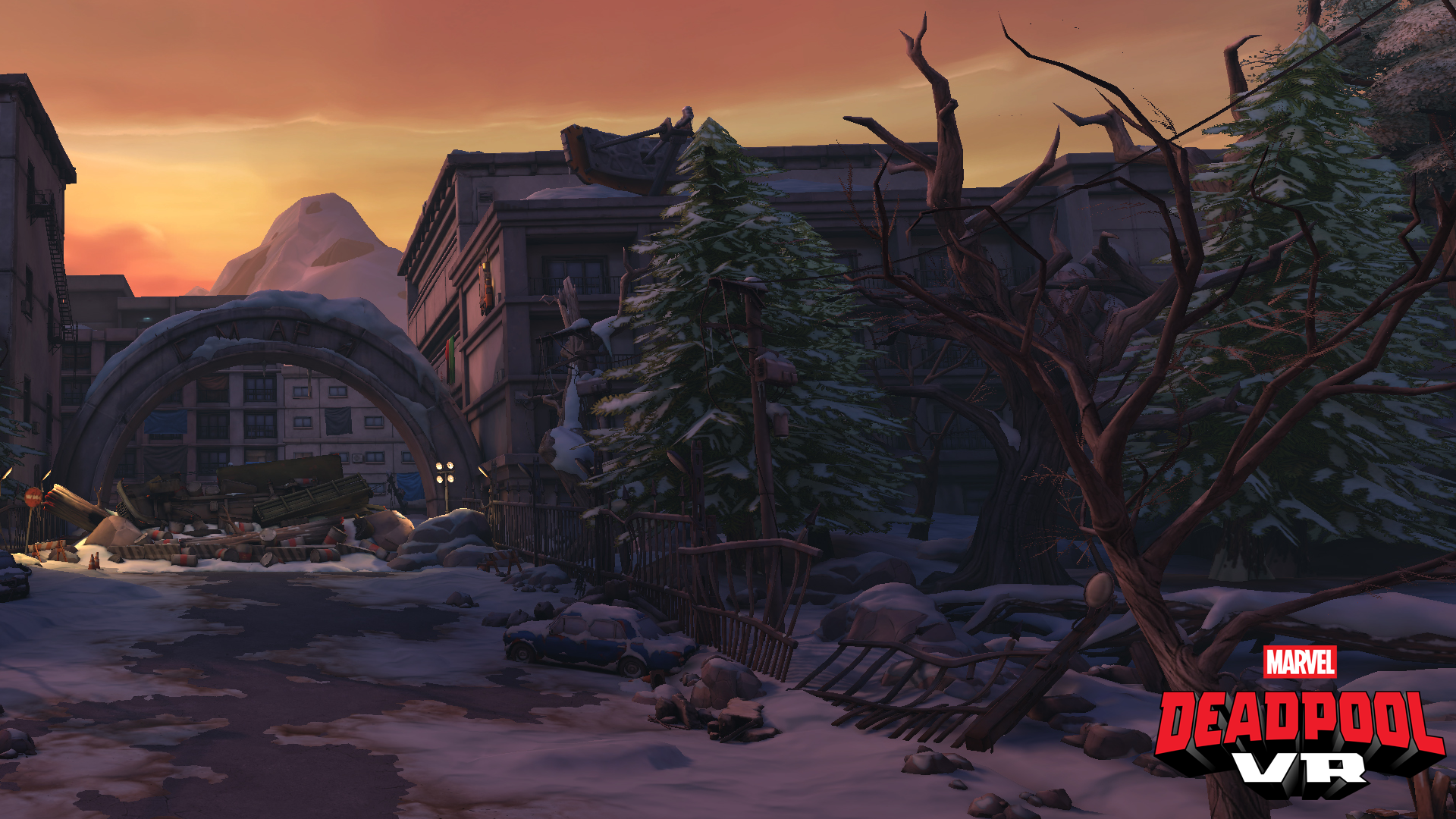
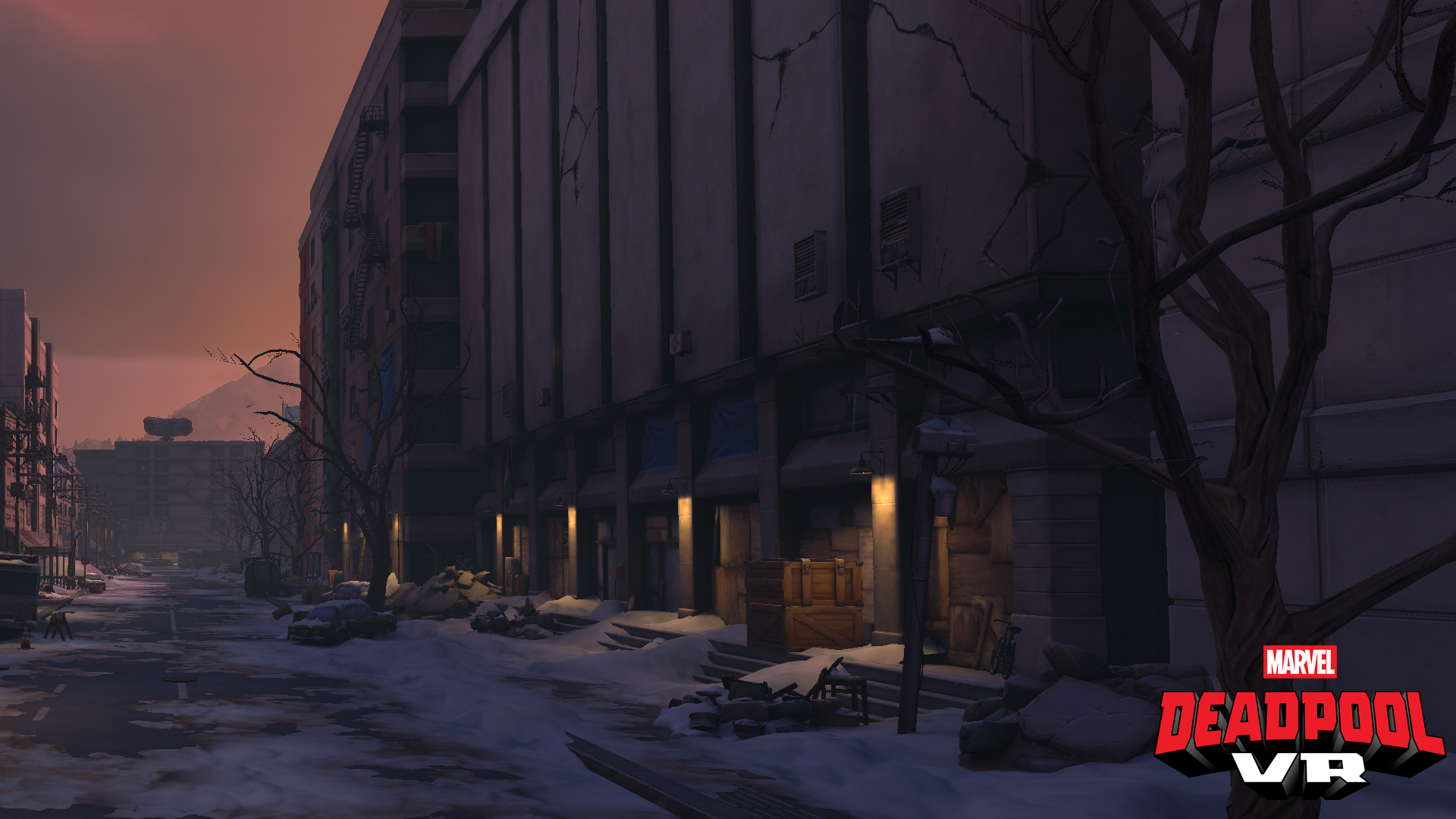
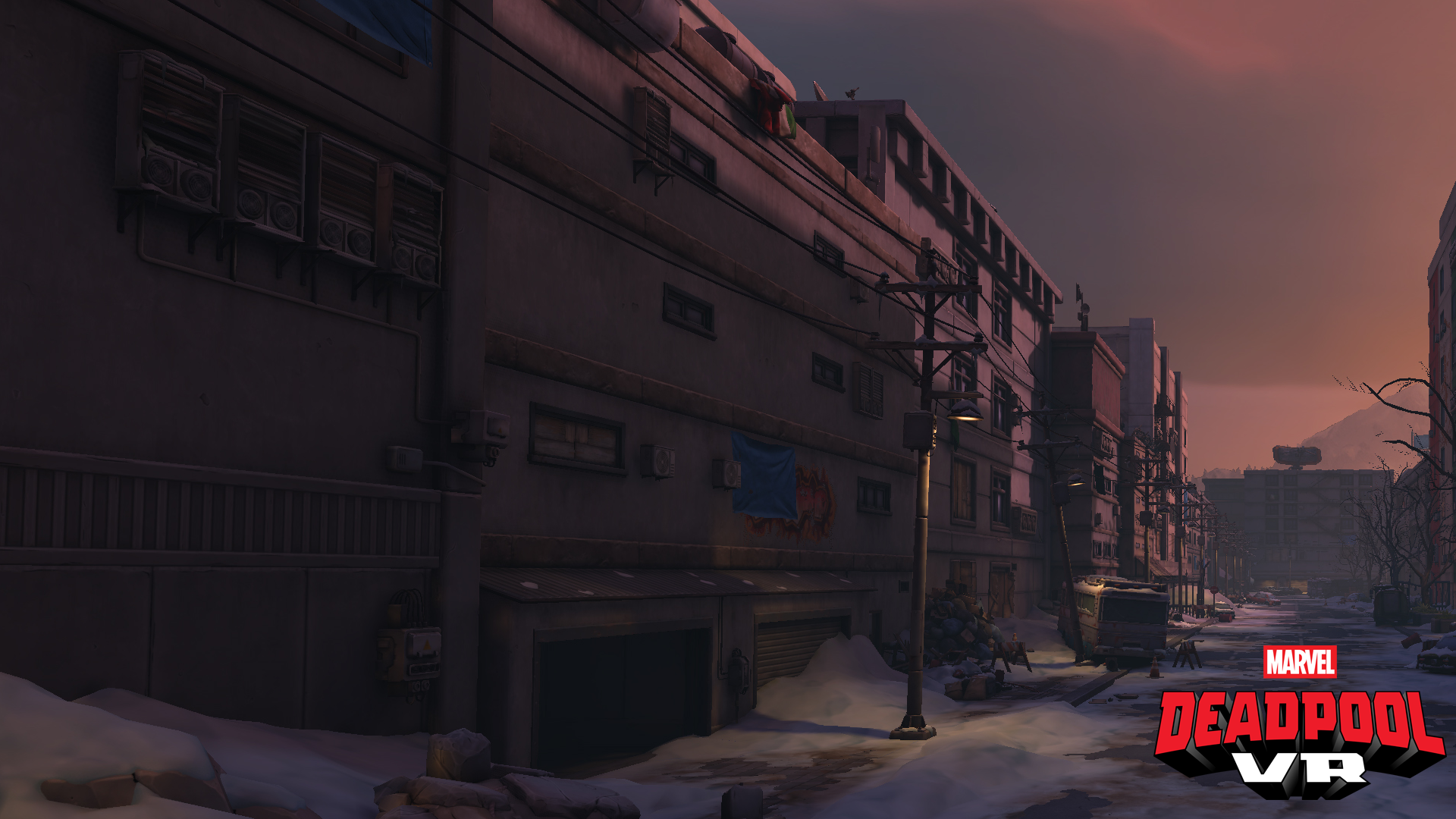
Each building had about 12 variations, with several versions of stacked, modular floors, and accompanying LODs. Our last LOD was a simple shape, baked down using 3DSMax's render to texture feature to maintain three UV Channels worth of information; a technique I also employed on Gang Beast's Beef City. Because of these tedious optimization passes this level — despite its complexity, scale, and number of environment assets — runs beautifully in VR.
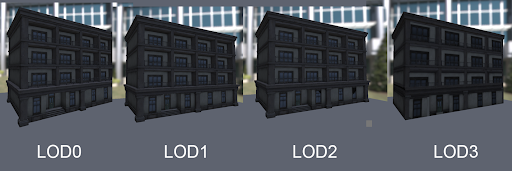
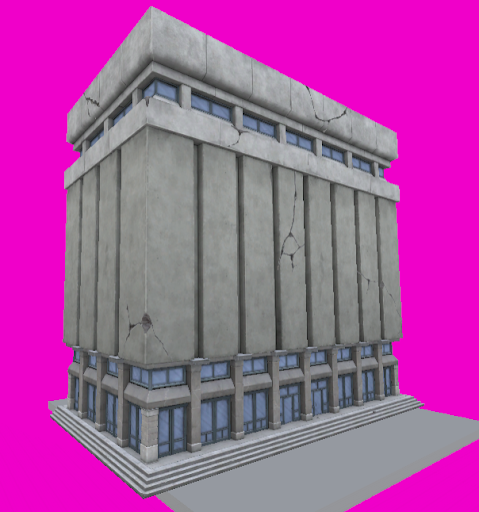
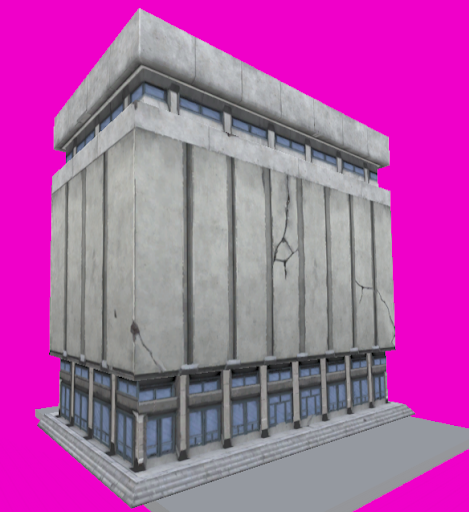
Side by side screenshots of an LOD0 building and an LOD3 building: 30,000 triangles vs 36 triangles.
After the project concluded I went on to author a post-mortem document describing my QA and QC tasks, outlining my efficiency, production contributions, and the steps I took to help effectively manage multiple studios' incoming environment art work, and how a team might be able to outsource such a vital part of the game production pipeline.
Please read the post-mortem document and blog post
on the SuperGenius website here, or click the image below.
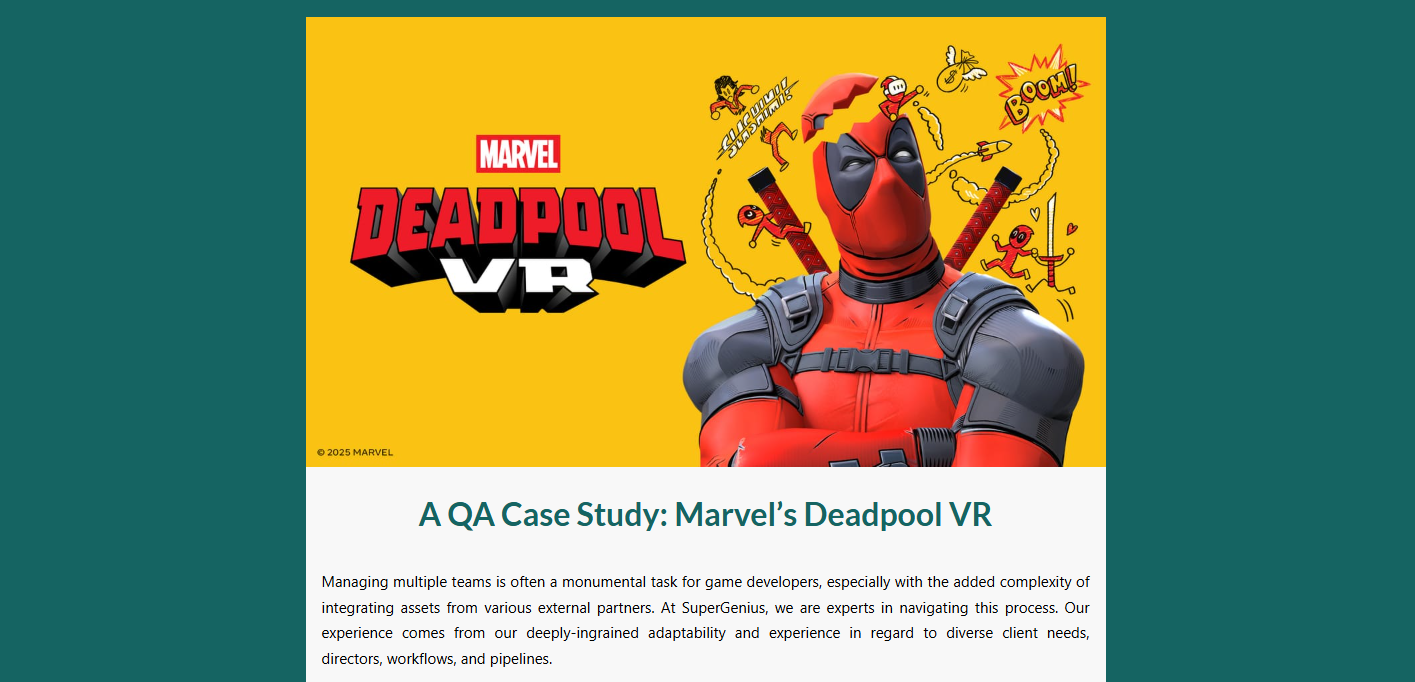
QA Case Study and post-mortem document authored by myself, Sophia Arnaout,
and edited by Vice President of Production Traci Cook.
Below is the trailer for Marvel's Deadpool VR.