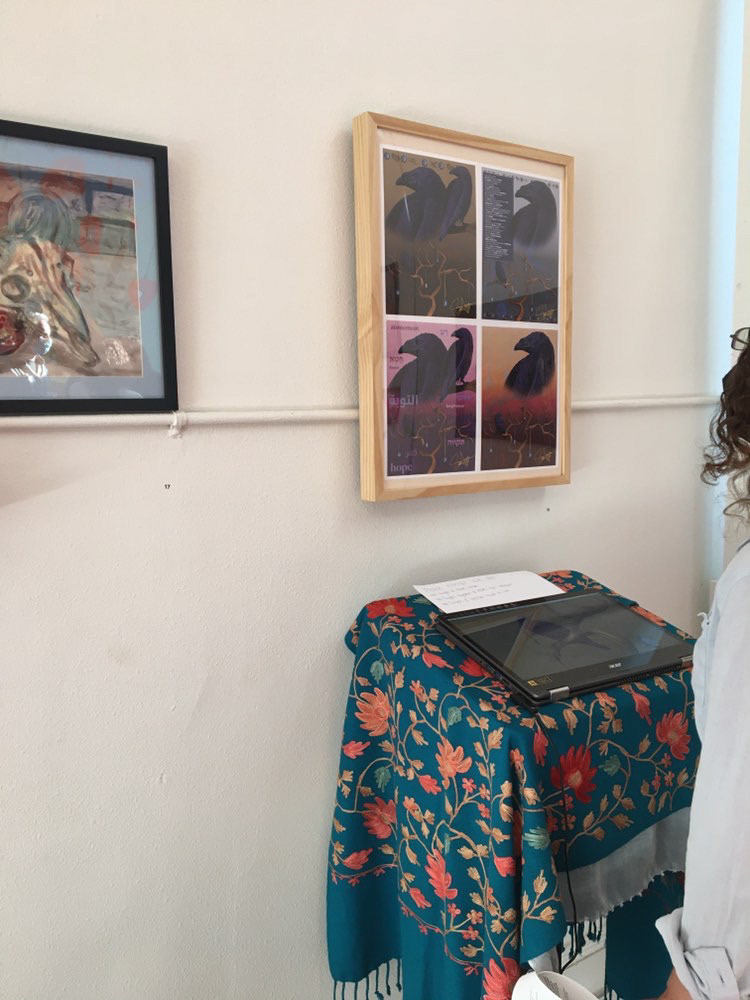
Here in Portland I am involved with a collective of artists, all of South-West Asian, and North African (SWANA) descent, representing multiple disciplines and backgrounds. In 2023 I was invited to participate in a showcase specifically for these artists in the diaspora. This artwork was featured at SWANA Rose Community Center in Portland, Oregon in their Dimensions showcase, and represented the only 3D game art piece in the collection.
PROGRAMS USED: ZBrush, 3DSMax, Substance Painter, Photoshop
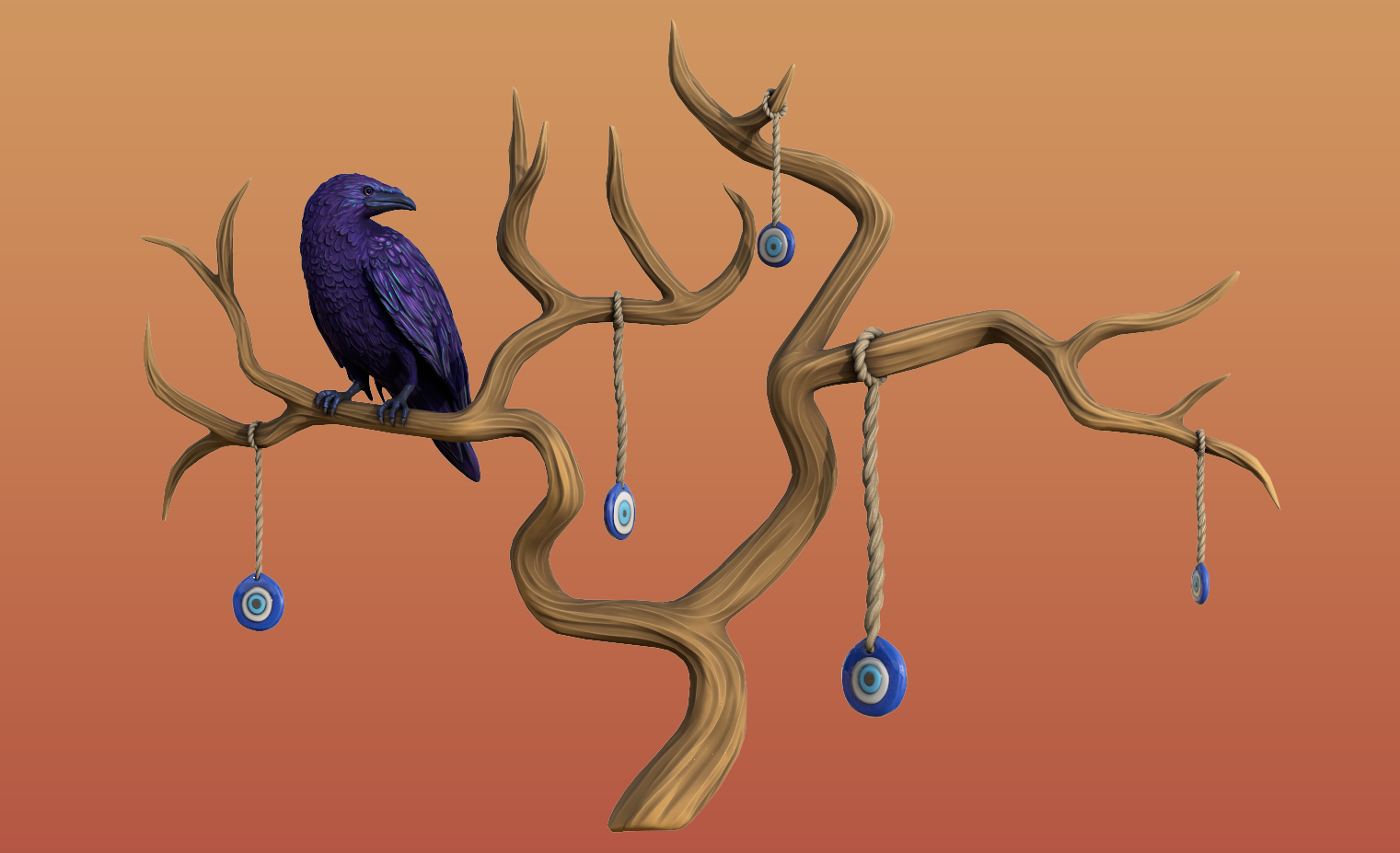
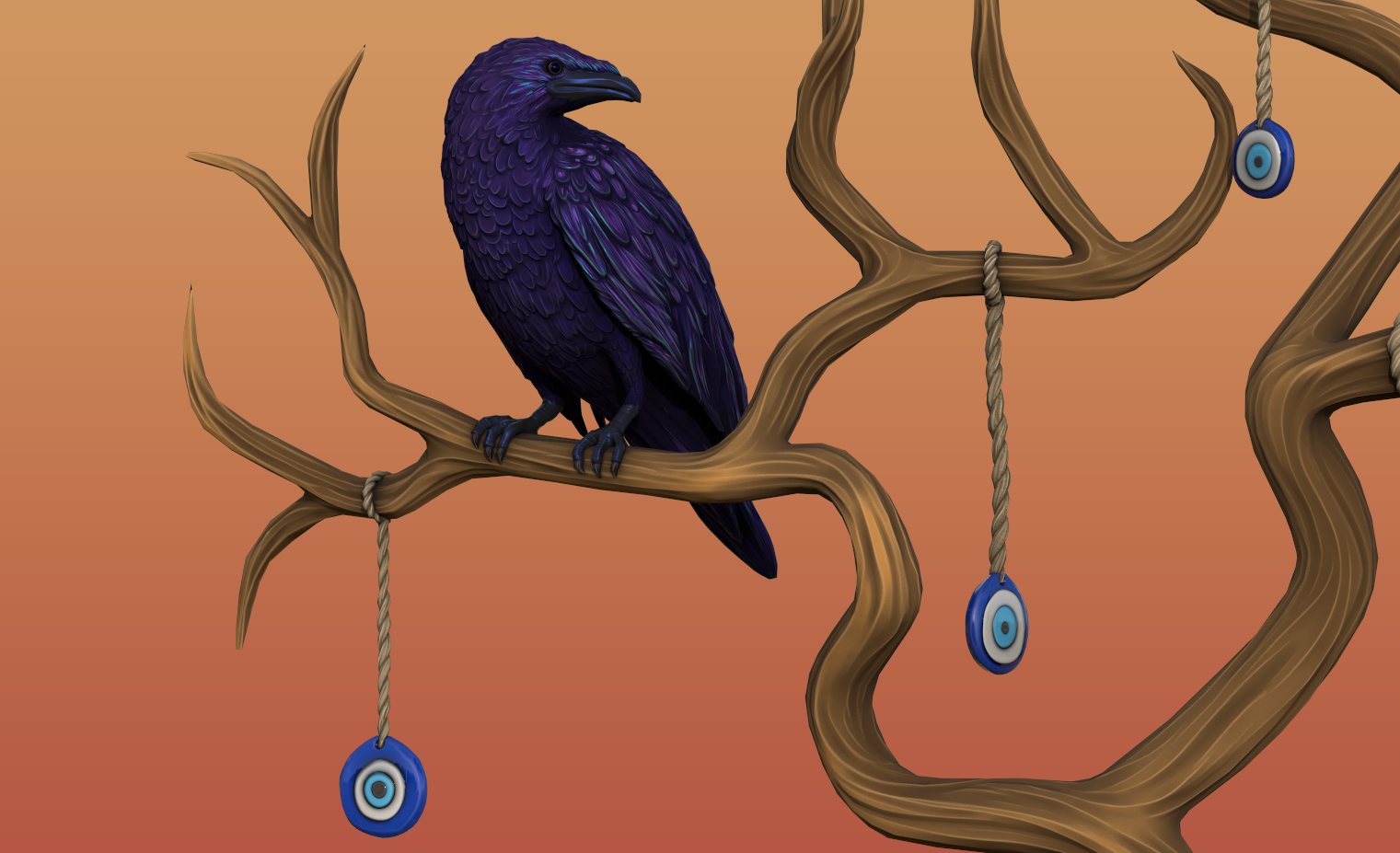
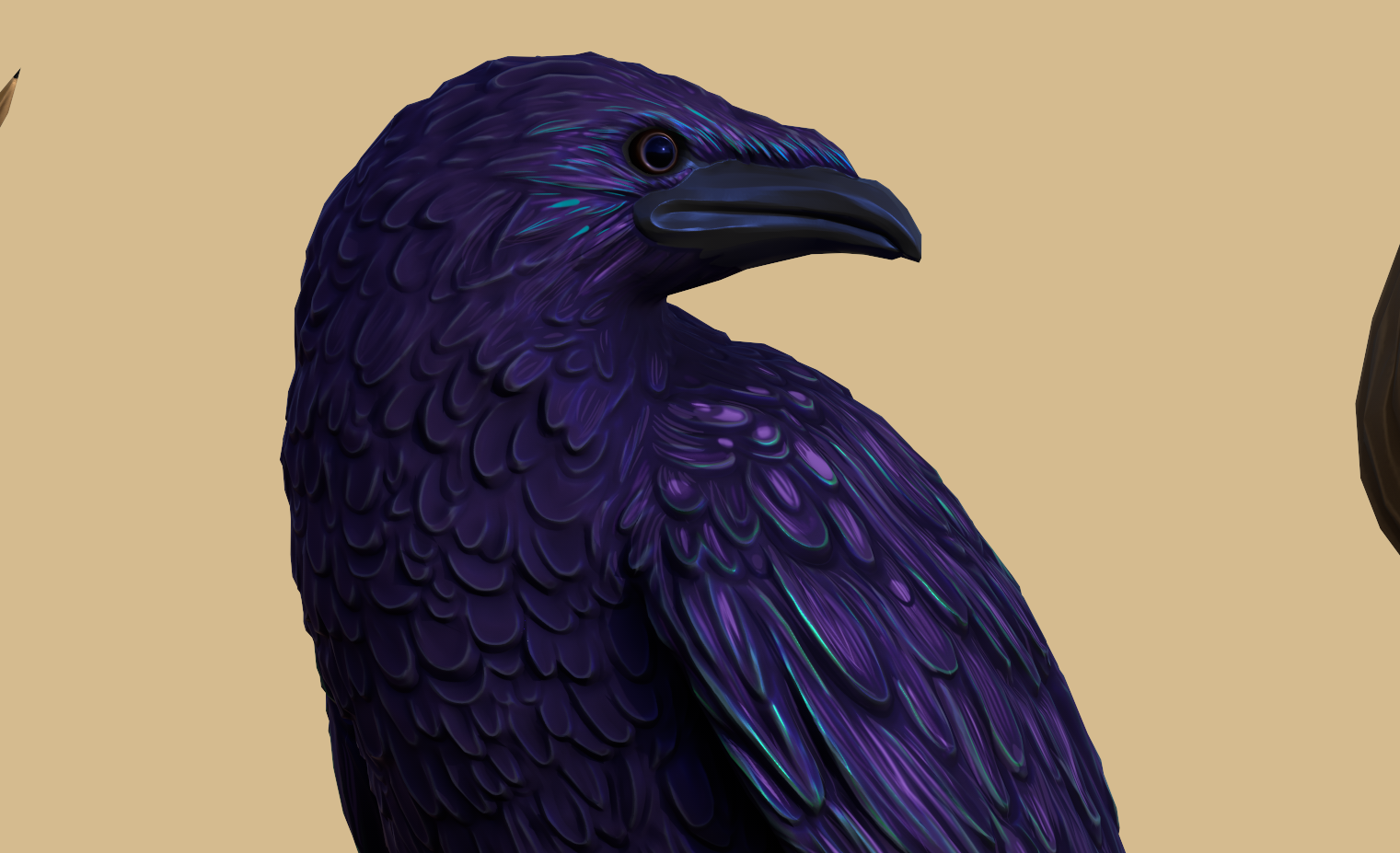
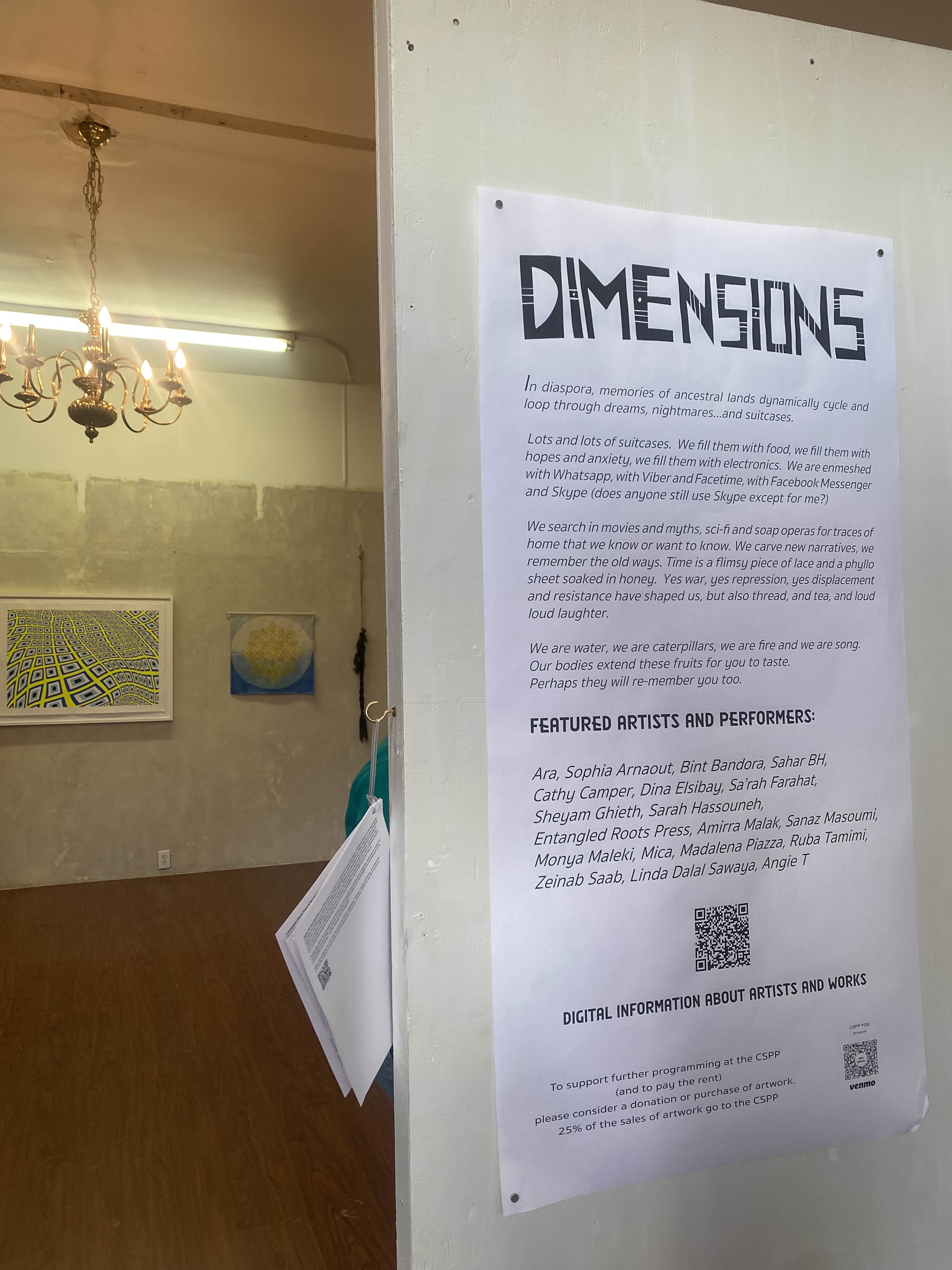
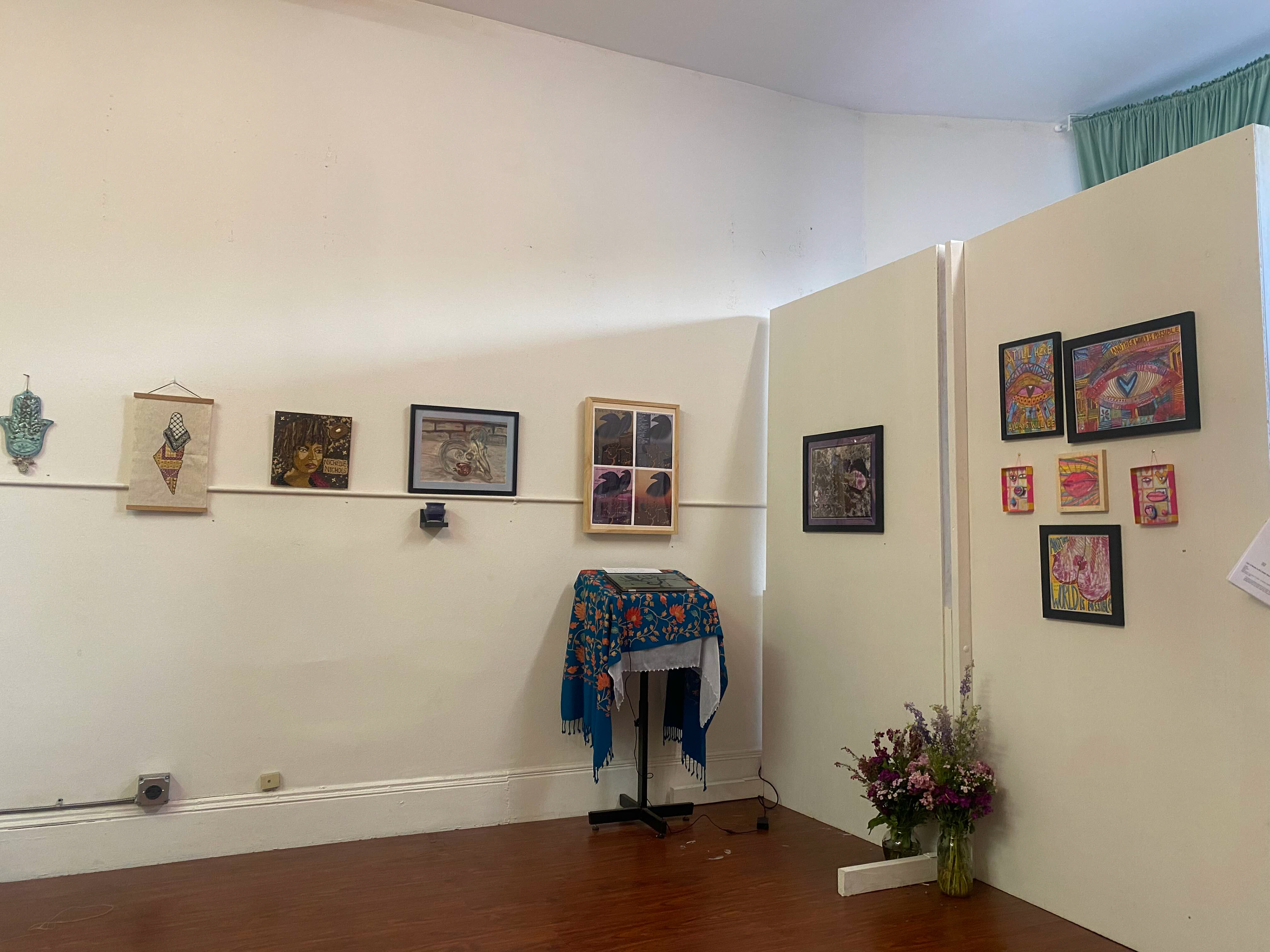
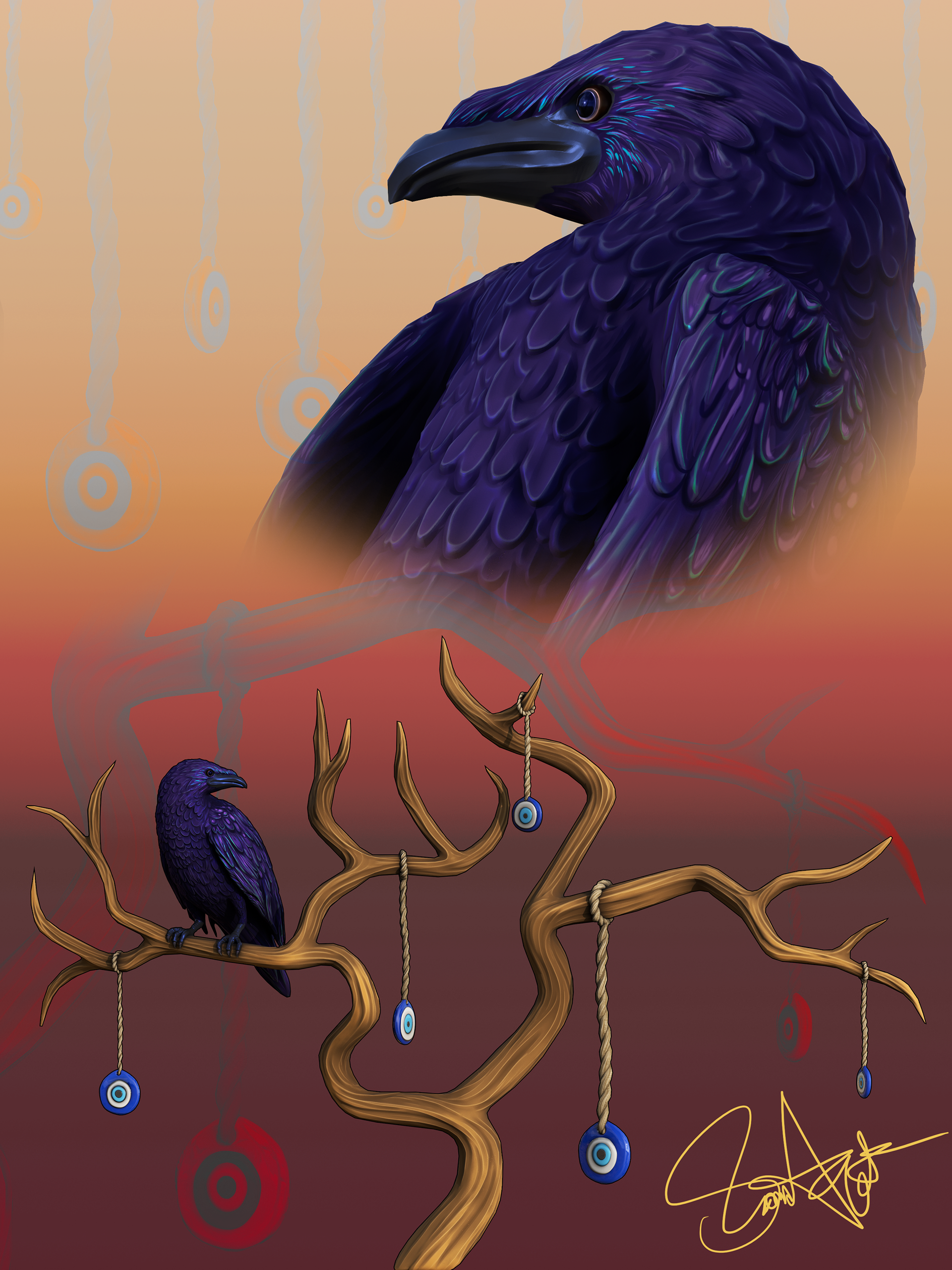
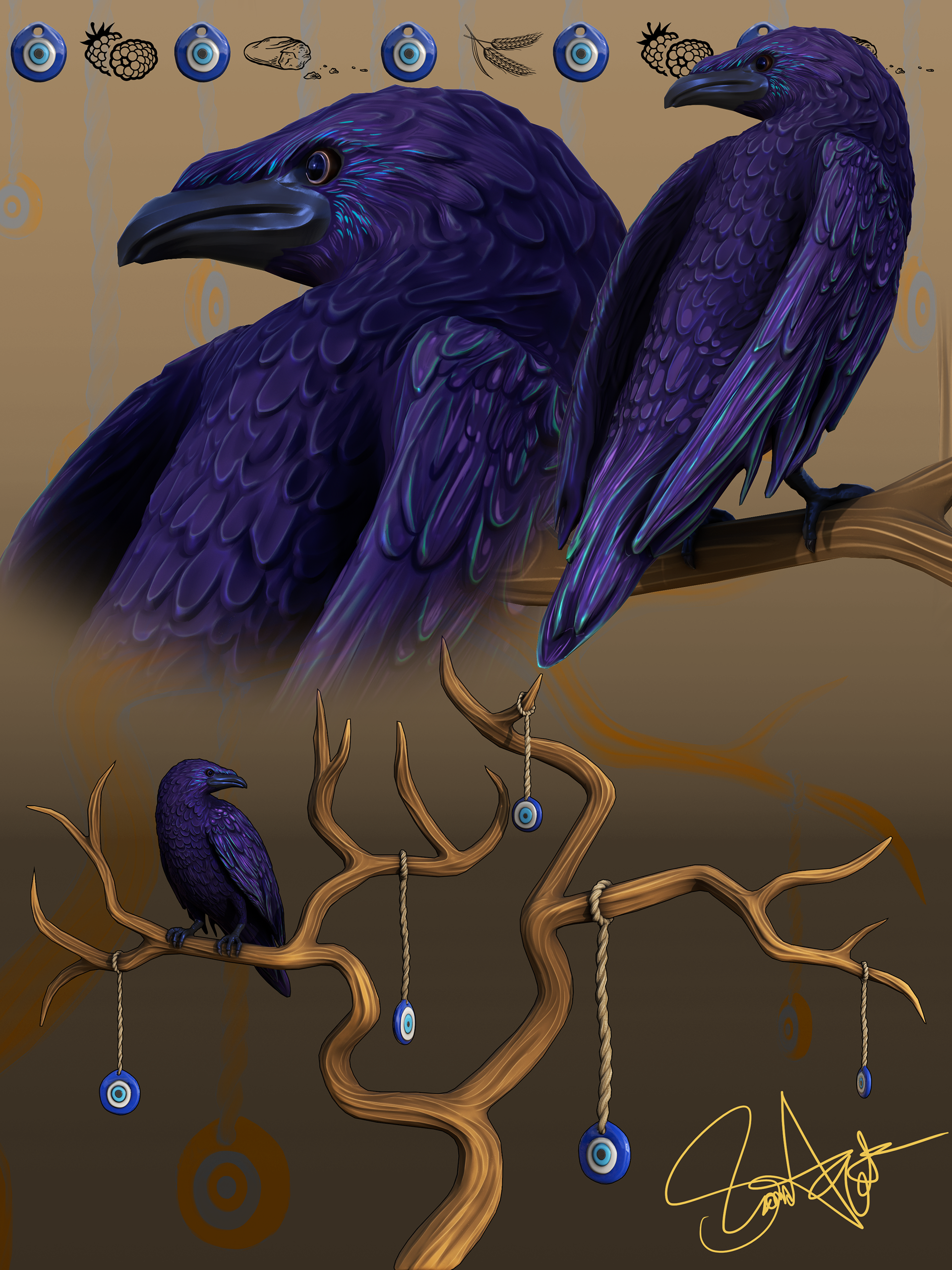
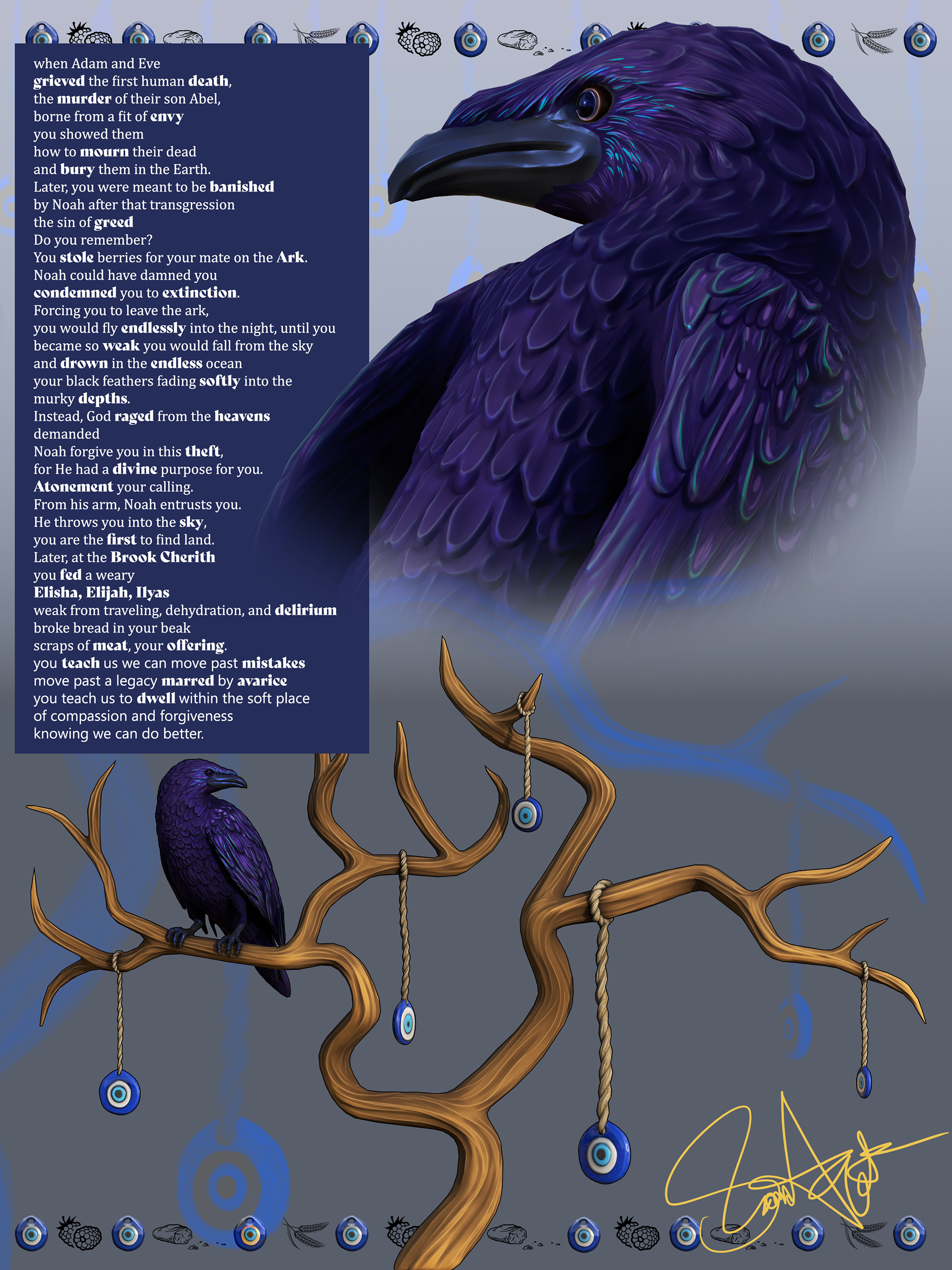
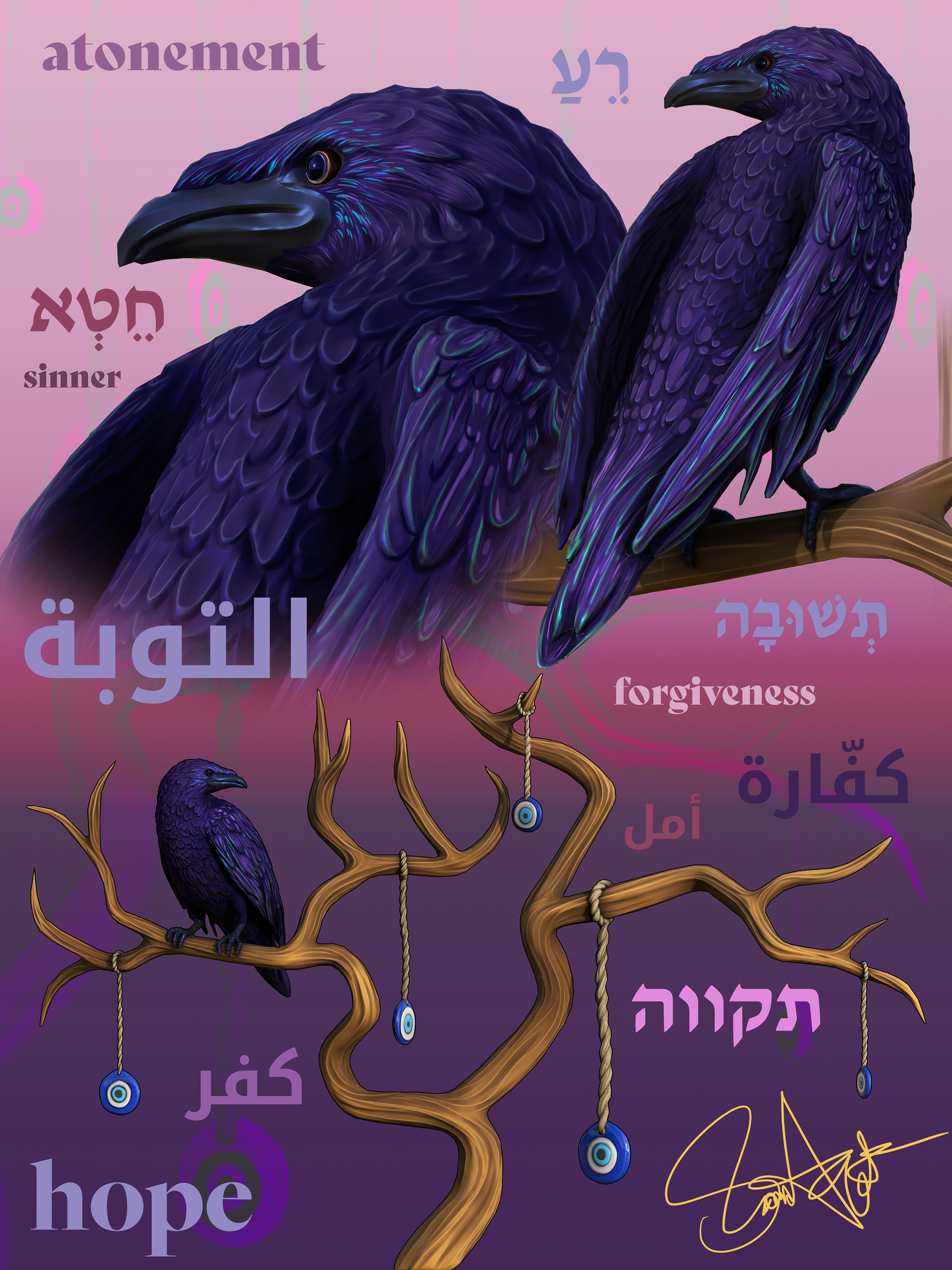
This personal project I made for the Dimensions showcase, was made to honor the mythology and folklore for the Raven for SWANA people of all faiths. In Judaism, Christianity, and Islam the raven is honored and revered for its symbolism. There are many a midrash, (legends and stories told by rabbinical scholars who study Talmudic literature, to account for gaps or missing pieces in the Torah; a midrash typically describes or explains missing context, and is taken as absolute truth,) about the Raven, which also align with indigenous peoples of the Pacific Northwest and their understanding of the raven being a trickster. For specifically Middle Eastern and North African Jews, Christians, and Muslims, the raven is understood as a being that had initially transgressed, was pardoned by God, and eventually atoned for his sin.
The story goes, that the raven taught Cain how to bury the dead; in some interpretations, primarily Islamic tradition, this was taken to mean that the raven actually taught Cain how to cover up a murder. Later, after the fall of Eden and during the flood which propelled Noah's ark, the raven stole berries from the food stash for his mate — according to Jewish tradition. Made furious by this, knowing resources were limited for him, his family and all of the animals, Noah threatened to banish the raven off the ark for his transgression — banished to fly endlessly into the night until he grew so weary from flight, he would plummet to the murky depths of the ocean. Thusly, condemning the raven to extinction. According to legend, God boomed down at Noah and told him not to banish the raven, as he would become valuable later. It is rumored in the Jewish tradition as well that it was the raven, not the dove, that was the first to spot and find land after the flood. Later still, hundreds of years later, when Elijah is weary from traveling and circling the drain of starvation and dehydration, it is the raven that comes to him with offerings of bread, berries, and meat. Some interpretations list "crows" as the helpful scores of birds, but corvids nonetheless.
The story goes, that the raven taught Cain how to bury the dead; in some interpretations, primarily Islamic tradition, this was taken to mean that the raven actually taught Cain how to cover up a murder. Later, after the fall of Eden and during the flood which propelled Noah's ark, the raven stole berries from the food stash for his mate — according to Jewish tradition. Made furious by this, knowing resources were limited for him, his family and all of the animals, Noah threatened to banish the raven off the ark for his transgression — banished to fly endlessly into the night until he grew so weary from flight, he would plummet to the murky depths of the ocean. Thusly, condemning the raven to extinction. According to legend, God boomed down at Noah and told him not to banish the raven, as he would become valuable later. It is rumored in the Jewish tradition as well that it was the raven, not the dove, that was the first to spot and find land after the flood. Later still, hundreds of years later, when Elijah is weary from traveling and circling the drain of starvation and dehydration, it is the raven that comes to him with offerings of bread, berries, and meat. Some interpretations list "crows" as the helpful scores of birds, but corvids nonetheless.
They are a symbol of hope and change, and I wanted to explore those themes through 3D art, as well as 2D composition and editing. I sold and continue to sell four print compositions of the project, as seen above.
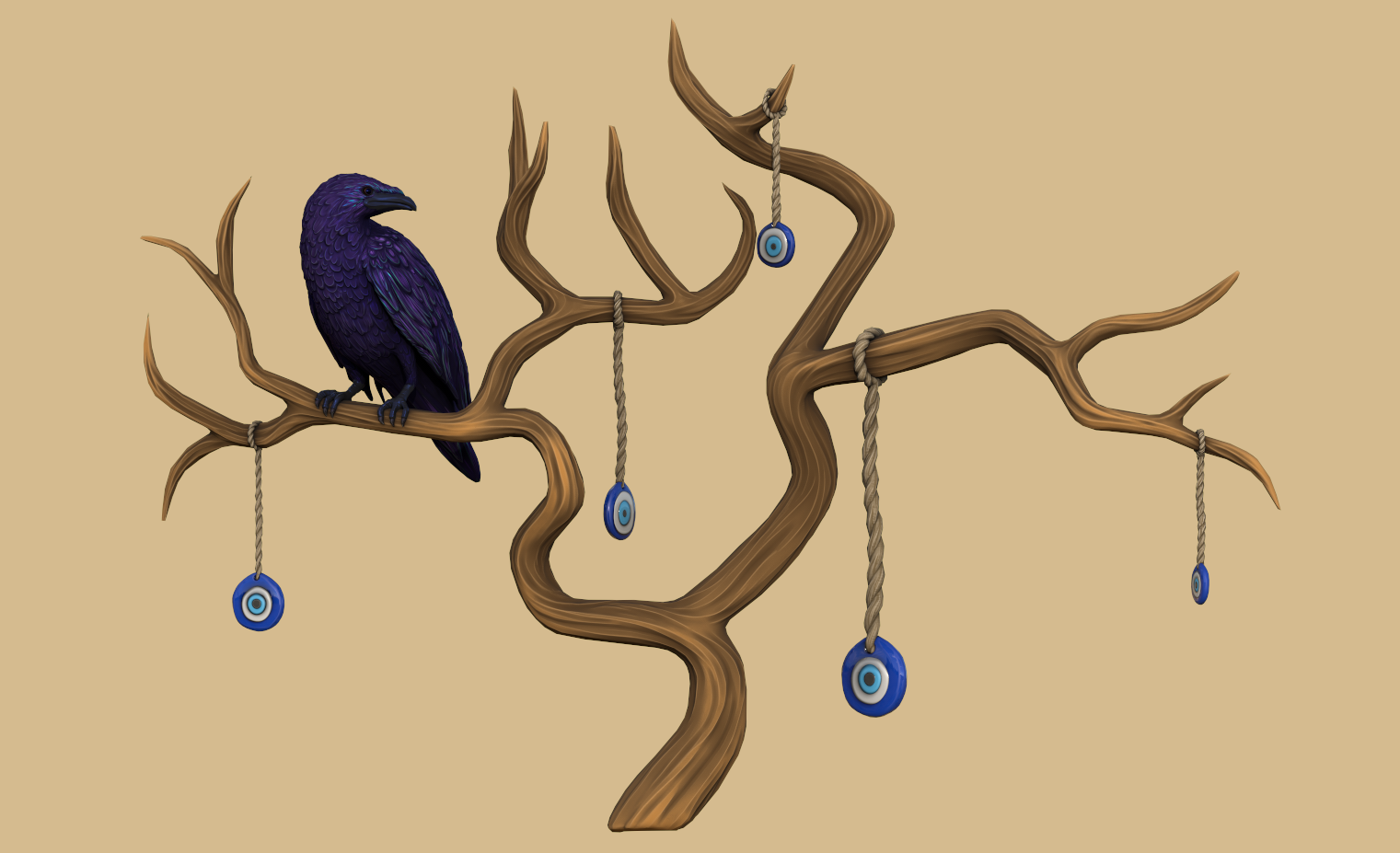
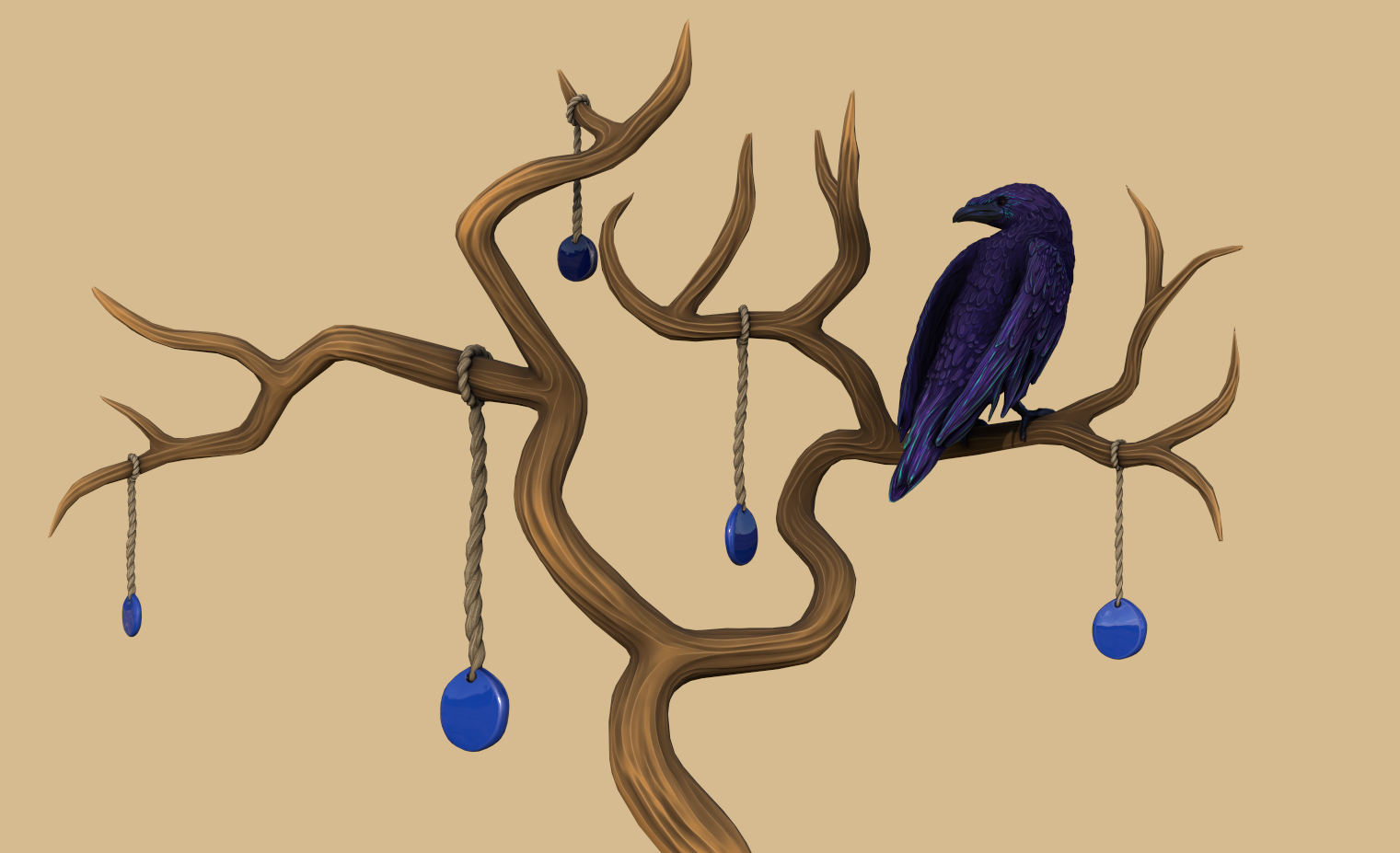
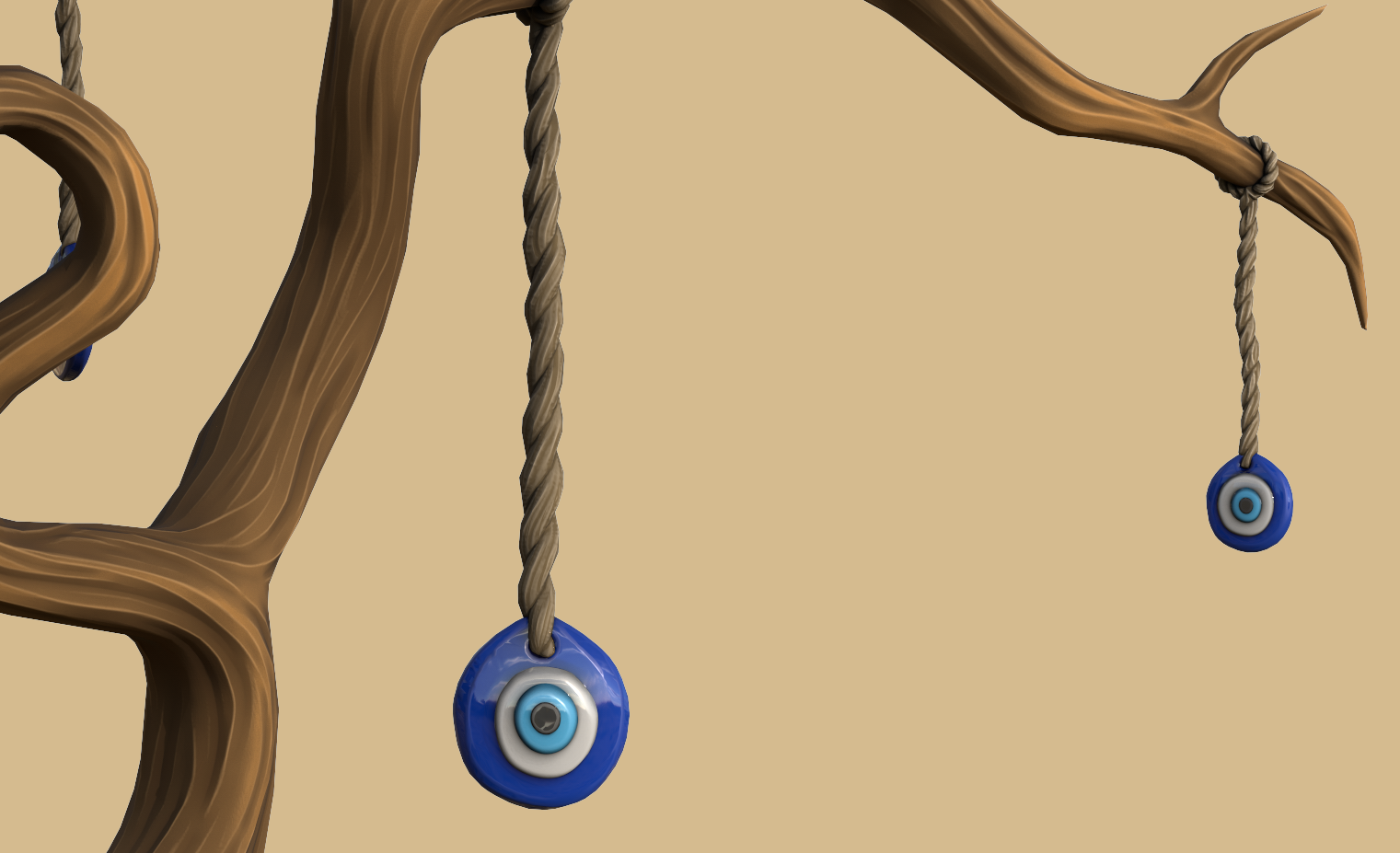
Some more stills of this work, captured in Marmoset Toolbag 4.
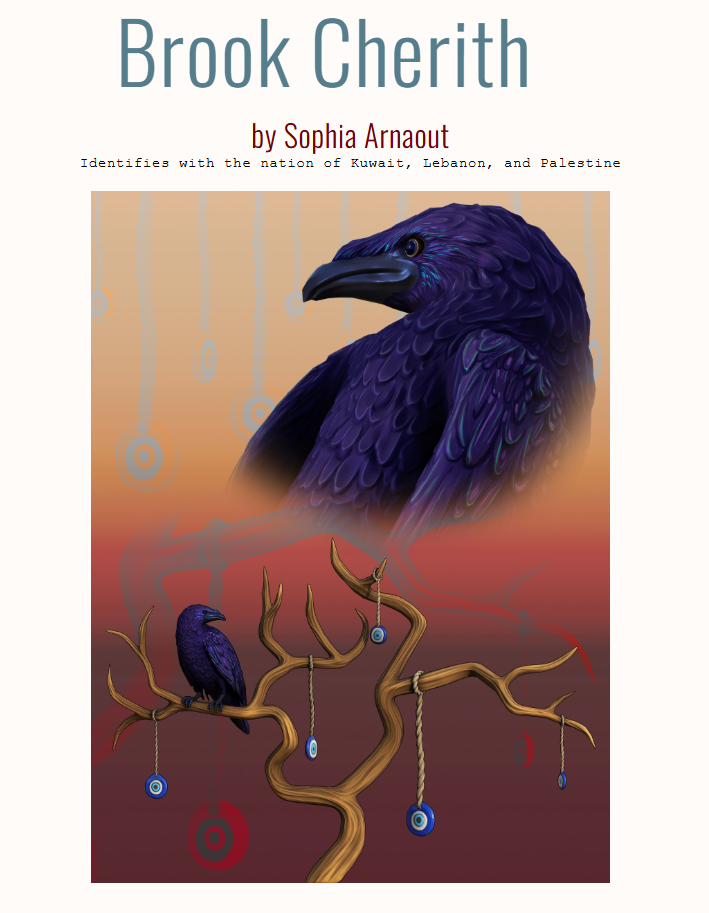
This work was also featured online in the digital magazine
Qafiyeh Review. Here is a bit more about their work:
Qafiyeh Review. Here is a bit more about their work:
A qafiyah (pronounced cah-fee-yah) is a crucial part of the Middle Eastern style of poetry called a ghazal. First written in 7th century Arabia in Arabic, it was later adopted by other cultures in the Middle East and North Africa. Ghazals now have been written in multiple languages including English, Farsi, German, Hindi, Pashto, Spanish, Turkish, and Urdu.
A ghazal consists of 5 or more couplets, with the first couplet ending in the same word. This repeated word (known as the radif) is the last word in every couplet. Every radif is preceded by the poem’s rhyme scheme that is set in the first stanza. This rhyme scheme that creates the rhythm of the poem is known as a qafiyah.
The Qafiyah Review hopes to achieve what the qafiyah and ghazal once did: uniting Middle Eastern and North African artists and authors by celebrating their work in a literary magazine centered around the beauty of M.E.N.A cultures and identities.